
Research shows that 57% of people who work out on days they commute do so at 5:30 p.m., stopping by fitness studios on their way home from work. That makes after-work exercise one of the most popular workout windows in the country. Studies also tell us that lack of time and fatigue are among the top barriers keeping people from actually following through.
On paper, working out after work sounds like a great idea. In real life, it can feel almost impossible. Your body may feel up to 20% stronger in the evening compared to morning hours, but your mental energy is shot. That’s the paradox of after-work exercise.
The good news is you don’t need perfect energy, unlimited time, or a hardcore plan to make after-work workouts part of your routine. You just need realistic expectations, a simple structure, and movement that fits the way your evenings actually look.
This guide walks you through why evening exercise is worth it, how to stay motivated when you’re tired, and ready-made routines you can follow without overthinking.
Why Working Out After Work Feels So Hard
Let’s be honest about what you’re up against. By the time you finish work, you’ve already spent hours making decisions, sitting in meetings, staring at screens, and managing other people’s expectations. Your mental energy is drained, even if you haven’t moved much physically.
Here’s what makes after-work exercise feel particularly difficult.
Decision fatigue is real. After a full day of choices, your brain doesn’t want to decide on one more thing, including what kind of workout to do. This is why having a simple, pre-planned routine matters so much.
Your body feels stiff and uncomfortable. Sitting at a desk or standing in one spot all day leaves your muscles tight and your joints creaky. The thought of moving can feel harder than it actually is once you get started.
Comfort is always available. Your couch, your bed, your favorite show are all right there, requiring zero effort. Evening workouts ask you to choose short-term discomfort over immediate relaxation, which goes against what your tired brain wants.
The day keeps running late. Meetings go long, emails pile up, traffic is worse than expected. By the time you actually have free time, your workout window feels squeezed or gone entirely.
You need to detect your specific obstacles to plan around them. When you know what you’re fighting, you can set up your routine to make evening exercise feel less like a hassle.
Why Working Out After Work Is Effective
An evening workout is more than just squeezing something in. It can change the way the rest of your day feels. You’ve spent hours in meetings, in front of a screen, or on your feet. Moving after all that helps your body and brain reset.
When you move in the evening, you give your mind a clear transition from work mode to personal time. You take a break from stress and constant notifications. You let your body shake off stiffness and tension from sitting or standing. And you build a routine that fits a typical full-time schedule.
Working out after work offers the same benefits as any exercise: better mood, stronger heart, better sleep over time. But you also get an extra mental buffer between your job and the rest of your life. Instead of carrying the whole day into your evening, you get a reset moment that belongs only to you.
The Science Behind Evening Workouts
You don’t need a lab to tell you that movement feels good, but it can be helpful to know what’s happening under the surface.
- For many people, strength, power, and coordination feel better in the late afternoon or early evening. Your core temperature is a bit higher, your joints feel looser, and your nervous system is more “awake.”
- When you move after work, you’re giving your brain a different job. Instead of replaying that meeting, you’re focusing on breathing, posture, and rhythm. That shift in focus, plus the release of feel-good chemicals from exercise, can leave you calmer and more grounded.
- For most people, light to moderate workouts a few hours before bed are completely fine and might even help you wind down. Very intense workouts right before bed can bother sleep for some, so if you notice that pattern, simply shift your workout a little earlier or keep nighttime sessions lighter.
Best Types of Workouts When You’re Tired
Not all workouts are created equal, especially when you’re running on fumes. Match your workout intensity to your actual energy level, not the energy level you wish you had.
When you’re mentally drained but physically okay:
Try cardio-based movement like brisk walking, light jogging, or dance classes. These workouts don’t require much decision-making once you start. You can zone out, follow along, and let your body do what it knows how to do. A 20 to 30 minute Perspire.tv dance or cardio class works well here because the instructor handles all the thinking for you.
When you’re physically stiff and tight:
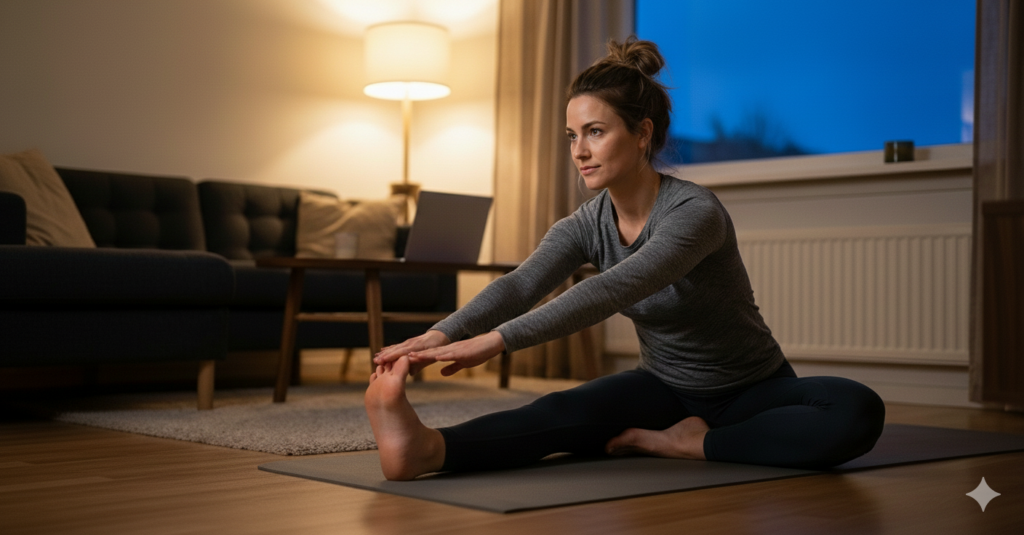
Focus on mobility work, stretching, or low-impact movement. Yoga, Pilates, or a gentle mobility flow can help your body feel better without demanding high energy. These sessions work out the kinks from sitting all day and leave you feeling looser and more comfortable.
When you have a bit more energy:
This is your window for strength training or interval workouts. Your body is warmed up from the day, your coordination is sharper, and you can push a little harder. Use this time for bodyweight circuits, resistance training, or HIIT sessions if that’s your style.
When you’re truly exhausted:
A 10 to 15 minute walk counts. Light stretching counts. Even five minutes of intentional breathing and gentle movement counts. On your lowest-energy days, the goal is just to move a little and break up the pattern of complete inactivity. You’re building a habit, not training for a competition.
The workout that works best is the one you’ll actually do. Start with what feels manageable, and you can always adjust intensity as you go.
How to Stay Motivated to Work Out After Work
Motivation doesn’t just appear out of nowhere, especially at the end of a long day. You need systems that make showing up easier and excuses harder to justify.
Decide before the day starts. Don’t wait until 6 p.m. to figure out if you’re working out. Decide in the morning, or even the night before, exactly what you’re doing and when. Write it down if that helps. This removes the moment where your tired brain can talk you out of it.
Keep your gear visible. Put your workout clothes on your bed, by the door, or in your bag. If you work from home, change into them right after you close your laptop. Physical preparation makes it harder to skip and easier to follow through.
Start stupidly small. Tell yourself you’ll move for just 10 minutes. Most of the time, once you start, you’ll keep going. But even if you don’t, 10 minutes is still 10 minutes more than sitting on the couch. Small wins build momentum.
Tie it to something you already do. Work out right after you get home, right after you change clothes, or right before dinner. This works because you’re not trying to create a new routine from scratch. You’re just adding movement to something that already happens every day.
Track your streaks, not perfection. Focus on how many days this week you moved, even if some sessions were short or low-intensity. Seeing progress builds motivation. Missing one day doesn’t erase the pattern you’re building.
Find workouts you don’t hate. If you dread every second of running, don’t run. Try dancing, strength training, walking, cycling, or anything else that feels less like punishment. Perspire.tv offers a wide range of workout style videos so you can experiment until something clicks.
Get social accountability. Tell a friend your plan, join a live class, or commit to a workout buddy. When someone else expects you to show up, it’s harder to bail. Even a simple text saying ‘just finished my workout’ to a friend can keep you consistent.
Motivation fades in and out. That’s normal. Build enough structure and small habits that you can keep moving even when motivation is low.
Practical Tips for Working Out After Work
Beyond motivation, these practical strategies make after-work exercise easier to fit into your real life.
Go straight from work to your workout. If you’re going to a gym or class, don’t stop at home first. Once you sit down, it’s over. Keep your gym bag in your car or at your desk and head straight there after you clock out.
Have a pre-planned workout ready. Don’t figure out what to do when you’re already tired. Pick a Perspire.tv class in the morning, save a simple bodyweight circuit on your phone, or follow the same 20-minute routine three days a week. The less thinking required, the better.
Fuel smartly. If lunch was hours ago, have a light snack one to two hours before your workout. A banana with nuts, yogurt with fruit, or crackers with hummus will give you energy without weighing you down. Save your full dinner for after you finish.
Set a time limit. Commit to 20 or 30 minutes, not an open-ended session. Knowing there’s an end point makes starting easier and keeps you from feeling like your entire evening disappeared into a workout.
Lower the intensity when needed. Not every session needs to be a max-effort performance. If you planned a run but feel awful, walk instead. If you wanted strength training but you’re drained, do gentle stretching. Moving at all is better than skipping entirely.
Protect your workout time. Treat it like a meeting you can’t miss. Put it on your calendar, tell your household when you’ll be busy, and don’t let small interruptions steal it from you. Your workout time is your time.
Working Out Before or After Work: What’s Better?
If you want to know if working out before or after work is a better choice overall, the honest answer is the best time is the one you can do consistently.
Here’s a simple comparison you can use to decide what fits you best.
| Factor | Morning Workout | After-Work Workout |
| Mood and Focus | Great for starting the day feeling accomplished and energized. | Great for releasing stress and switching out of work mode. |
| Schedule Conflicts | Fewer early-morning interruptions, but requires earlier wake-up. | Easier socially, but work or life can run late and clash with your plan. |
| Energy | Can feel tough if you’re not a morning person or short on sleep. | Many people feel physically stronger and more coordinated. |
| Social Aspect | Good if your gym or classes run morning sessions. | Often more class options and workout partners after work. |
| Sleep | Can support consistent bed and wake times. | Usually fine, as long as ultra-intense workouts aren’t right before bed. |
If you work a classic schedule and wonder when to work out for a 9 to 5 job, after work is often the most realistic window. This is especially true if mornings are all about kids, commuting, or getting out the door. Pick one or two time slots you can protect most days of the week.
What to Do When You’re Too Tired to Work Out
Some days, you’re legitimately too tired to exercise. Other days, you just feel too tired, but movement would actually help. Here’s how to tell the difference and what to do in each case.
If you’re mentally drained but physically okay:
A short, easy workout can actually boost your energy. Your body isn’t worn out; your brain is. Try a 10 to 15 minute walk, a gentle yoga flow, or a low-impact dance class. Movement shifts your mental state and often leaves you feeling better than you did sitting still.
If you’re feeling run down or getting sick:
Skip the workout. Rest is productive when your body needs recovery. Pushing through when you’re truly unwell can make things worse and keep you out longer. Take the day off, sleep well, and come back when you feel better.
If you’re physically sore or stiff:
Light movement can help. Stretching, walking, or a mobility session gets blood flowing and can ease soreness. Just avoid intense workouts that target the same muscles you’re already feeling.
If you’re just not feeling it:
Give yourself the 10-minute rule. Start moving for just 10 minutes. If you still feel terrible, stop and rest. Most of the time, once you get started, you’ll find the energy to continue. And if you don’t? That’s fine too. Ten minutes still counts.
Listen to your body without using ‘I’m tired’ as an automatic excuse. There’s a difference between needing rest and just needing a little push to get moving.
How Long Should Your After-Work Workout Be?
One of the biggest misconceptions is that workouts need to be long to count. That’s not true. You can see real benefits from short sessions, especially when you’re consistent.
Here’s how to match your workout length to the time you actually have:
If you have 10 to 15 minutes:
Do a mobility flow, a brisk walk, or an ultra-short follow-along class. This is enough to break up your day, loosen tight muscles, and get your blood moving. It’s not a full training session, but it’s far better than nothing.
If you have 20 to 30 minutes:
You can fit in a complete workout. Try a full-body circuit, a light jog or walk, or a short cardio or dance class. This is the sweet spot for most people. It’s long enough to feel productive, short enough to fit into a busy evening.
If you have 40 to 60 minutes:
You have time for a full strength and cardio combo, a longer follow-along workout, or a small group class. Use this window for more structured training, heavier lifting, or anything that requires warm-up, workout, and cool-down.
The most important thing isn’t hitting a specific duration. It’s showing up regularly. Three 20-minute workouts per week will do more for you than one perfect 90-minute session.
Quick After-Work Workout Templates You Can Use
You don’t have to design your own plan from scratch. Here are simple options for different energy levels and schedules.
1. The 20-Minute After-Work Reset
Perfect when you’ve had a long day and want something short but effective.
Structure:
- 5 minutes: gentle mobility (neck rolls, shoulder circles, hip circles, easy lunges)
- 10 minutes: low-impact cardio
- brisk walk
- light step-touch in place
- a beginner Perspire.tv cardio or dance class
- 5 minutes: stretch and breathe
This is enough to raise your heart rate, loosen your muscles, and feel like you’ve done something for yourself even on the busiest days.
2. The 45-Minute Strength + Cardio Combo
Use this when you have a little more time and want a complete session.
Structure:
- 5–10 minutes: warm-up
- marching, arm swings, light dynamic stretches
- marching, arm swings, light dynamic stretches
- 20 minutes: strength circuit (repeat 2–3 times)
- Squats or sit-to-stands
- Push-ups (wall, incline, or floor)
- Hip hinges or glute bridges
- Rows with dumbbells or bands
- Squats or sit-to-stands
- 10–15 minutes: cardio
- brisk walk, cycling, or a Perspire.tv cardio class
- brisk walk, cycling, or a Perspire.tv cardio class
- 5 minutes: cool-down and stretching
You can do this at a gym, at home with basic equipment, or by following along with a class that mixes strength and cardio.
3. At-Home After-Work Workout When You Don’t Want to Leave the House
You’ve closed your laptop and the idea of commuting to a gym makes you want to hide under a blanket. This is where at-home follow-along workouts shine.
Example plan:
- Turn on a 15–30 minute Perspire.tv beginner or low-impact class
- Clear a small floor space and grab a mat or towel
- Let the instructor cue you through bodyweight moves, simple cardio bursts, and a cool-down
You don’t have to think about sets, reps, or structure. Just press play and move at your own pace.
What to Eat Before and After Your After-Work Workout
What you eat around your workout matters for how you feel.
Before your workout
If lunch was several hours ago, have a light snack 1–2 hours before exercising. Think:
- A banana with a small handful of nuts
- Yogurt with fruit
- Whole-grain crackers with a little cheese or hummus
You’re aiming for something that gives you energy without feeling heavy.
After your workout
Plan on a balanced dinner with:
- Protein (chicken, tofu, fish, beans, eggs)
- Carbohydrates (rice, potatoes, pasta, whole grains)
- Some healthy fats and vegetables
If you train late, keep dinner satisfying but not so heavy that you feel stuffed when you go to bed. If you’re hungry between your workout and dinner, a small snack (like fruit or a yogurt) can bridge the gap.
Common Evening Workout Mistakes (and How to Avoid Them)
Even with the best intentions, it’s easy to fall into patterns that make after-work exercise harder than it needs to be. Here are the most common mistakes and how to fix them.
Mistake 1: Waiting until you feel like it.
If you wait for motivation to strike, you’ll skip most days. Decide in advance when you’re working out and treat it like a scheduled commitment, not a last-minute choice.
Mistake 2: Going home first.
Once you sit on the couch, your workout is probably over. If you’re going to a gym or class, go straight there. If you’re working out at home, change into workout clothes right after work ends.
Mistake 3: Skipping the warm-up.
After sitting all day, your body needs a few minutes to transition into movement. Skipping the warm-up increases injury risk and makes the workout feel harder. Take 5 minutes to do light cardio or stretches before you start.
Mistake 4: Making it too hard.
If every workout leaves you destroyed, you won’t stick with it. Most of your after-work sessions should feel challenging but manageable. Save the really intense workouts for days when you have more energy.
Mistake 5: Not eating enough.
If you haven’t eaten since lunch and it’s been 5 to 6 hours, you won’t have the energy for a good workout. Have a light snack an hour or two before you exercise.
Mistake 6: Exercising too late and too hard.
Very intense workouts right before bed can interfere with sleep for some people. If you notice this happening, move your workout earlier or switch to lighter movement in the late evening.
Mistake 7: All-or-nothing thinking.
Missing one day doesn’t ruin your progress. Doing 15 minutes instead of 45 still counts. Stop treating imperfect workouts as failures. Consistency over time matters more than any single session.
Safety Tips for Working Out After Work
Even with the best intentions, your health comes first. Stop your workout and check in with a professional if you experience:
- Chest pain or tightness
- Sudden shortness of breath that feels unusual for you
- Dizziness, faintness, or feeling like you might pass out
- Pain that feels sharp, severe, or not like normal workout soreness
If you have a medical condition or you’re new to exercise, it’s worth talking to a healthcare provider about your plan, especially if you’re adding more intensity or working out after work for the first time in a long while.
FAQs About Working Out After Work
Is it okay to workout right after work if I feel exhausted?
Yes. If you’re simply mentally tired, a light workout can actually help you feel better. Start with something small, like a 10–15 minute walk or a short guided class. If you feel worse as you move, dial it back, but most people find they feel more energized once they get going.
When should I work out if I work 9–5?
If mornings are packed or you’re not an early riser, working out after work is often your most realistic window. That might mean heading straight to the gym after you clock out, walking before you start dinner, or pressing play on a follow-along routine right after you shut your laptop.
Is it bad to work out at night?
Not automatically. For many people, evening workouts are totally fine and may even help with stress and long-term health. If you notice that very intense sessions close to bedtime disrupt your sleep, keep those harder workouts a bit earlier and use late-night sessions for lighter, low-stress movement.
Should I do cardio or weights after work?
There’s no wrong choice. If you sit a lot during the day, some people like to start with light cardio to shake off stiffness, then add strength work a couple of nights per week. You can also follow classes that blend both. Choose what feels best for your energy and your goals.
How many days a week should I work out if I have a full-time job?
A great starting point is 3–4 days per week of structured movement, plus as much everyday walking and light activity as you can. That might look like three after-work workouts and one weekend session. Over time, you can adjust frequency and length to match your schedule.
Final Thoughts
Working out after work doesn’t have to be all-or-nothing. Some evenings you’ll have energy for a full, focused session. Other nights, all you’ll have in you is a short walk and a few stretches and that still counts. The point isn’t to be perfect. It’s to keep giving your body small chances to move, recover, and feel better than it did yesterday.
If you want your evenings to feel less like a battle and more like a reset, Perspire.tv can meet you where you are. You’ll find beginner-friendly workouts, low-impact options, strength, mobility, and dance classes you can do right after work whether you have 10 minutes or a full hour.