
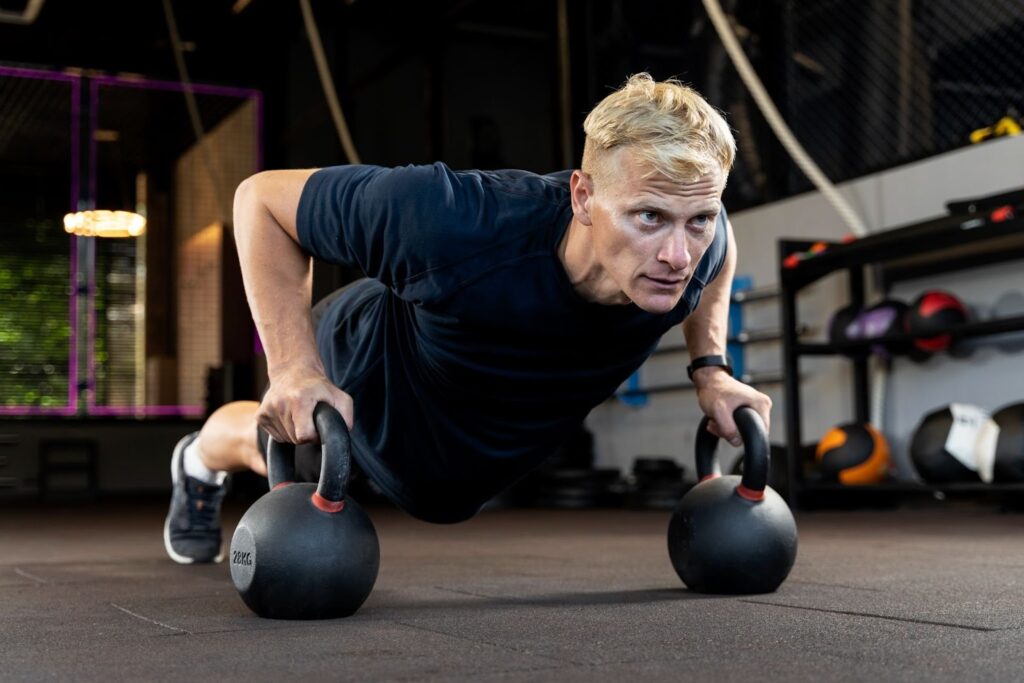
Functional strength training focuses on movements you use in everyday life. Instead of isolating single muscles, you train your body to push, pull, hinge, squat, rotate, and carry weight in ways that feel natural. When you build strength through these patterns, simple tasks like lifting groceries, getting up from the floor, and reaching overhead become easier and safer.
Many people think of it as a mix of strength, mobility, and balance. It improves how your body works as one unit, not just how much weight you can lift. In this article, you’ll see what functional training looks like, why it helps, and how to build your own routine at home or in the gym.
Key Takeaways
- Functional strength training builds strength for daily tasks.
- You use full-body movements that teach your muscles to work together.
- It can improve balance, mobility, posture, and joint health.
- You can do functional strength training at home with simple equipment.
- Beginners can start with bodyweight versions and progress slowly.
- A structured functional strength training program mixes pushing, pulling, squatting, hinging, and carrying each week.
What Functional Strength Training Aims to Improve
Functional training helps you build strength that transfers to real life. Instead of focusing on one muscle at a time, you train movement patterns. This helps your body stay coordinated, stable, and ready for unpredictable pressure like catching yourself when you trip or lifting something off the ground safely.
Many people choose functional training because it feels practical. It helps you move better, not just lift heavier. It also tends to feel smoother on the joints since the exercises match natural movement.
Mobility and Ease of Movement
Functional patterns teach your joints to move the way they were designed to move. You practice bending, rotating, and reaching in controlled ways, which helps you feel less stiff during normal tasks. Over time, everyday motions like getting out of a car, stepping up onto a curb, bending to pick something up feel smoother because your body moves through a fuller range without fighting itself.
Better Stability and Balance
Many functional exercises challenge your balance by mixing lower-body strength with core control. You learn how to stabilize your hips and spine without relying on crunches or isolated ab work. This carries over to real life because you get better at staying steady when walking, changing direction, or catching yourself during unexpected movements.
Strength for Real Tasks
Traditional strength exercises often build strength in one muscle at a time. Functional strength training builds strength through patterns you use daily. When you push, pull, squat, hinge, and carry weight through these patterns, you get better at things like lifting boxes, carrying groceries, climbing stairs, or holding awkward items. You feel stronger in ways that matter outside the gym, not just in numbers on a machine.
Lower Injury Risk
Because you train your body as a connected system, you place less stress on single joints. You learn how to move with better alignment and control, which lowers your chance of strains and overuse issues. This becomes especially helpful for people who sit for long hours or repeat the same motions during work or sport. When your muscles support each other, you rely less on small stabilizers that get overloaded easily.
Improved Posture
Functional exercises strengthen the muscles that help you stay upright. That’s your back, hips, and core. When these areas get stronger, standing tall takes less effort. You naturally sit and move with better alignment, which can reduce neck tightness, lower-back discomfort, and the feeling of “slouching” when working at a desk. Good posture also helps your breathing because your ribcage and diaphragm can move more freely.
More Control in Daily Movement
With functional work, you practice slow, deliberate movement before adding speed or load. This teaches your body how to control momentum instead of letting momentum control you. That control helps when you lift something heavy, change direction quickly, or handle unexpected pressure during daily life.
Stronger Mind-Body Awareness
Functional training often makes you more aware of how you move. You notice small shifts in balance. You feel which muscles activate when you hinge or rotate. This awareness helps you correct poor movement habits and stay safer during exercise and daily tasks.
Functional Strength Training Vs Traditional Strength Training
Both types of training build strength, but they do it in different ways. Functional work teaches your body how to move as a connected system. Traditional strength work focuses more on individual muscles and heavier loads. Understanding the difference helps you choose what fits your goals.
Functional strength training uses patterns you already use during daily life. You practice squatting, hinging, pushing, pulling, rotating, and carrying weight in ways that match real movement. This builds coordination, balance, joint control, and practical strength. The load is often lighter than traditional lifting, but the movement quality is higher.
Traditional strength training trains muscles one group at a time. This approach helps you build size, power, and maximum strength. You use barbells, dumbbells, and machines to overload specific muscles with predictable reps and sets. It’s straightforward, easy to progress, and very effective for growing strength or shaping certain areas.
Here’s a simple comparison:
| Training Style | Focus | Typical Exercises | Best For |
| Functional Strength Training | Movement patterns, joint control, full-body coordination | Squats, hinges, carries, lunges, push-pull patterns | Everyday life, overall mobility, joint health |
| Traditional Strength Training | Isolating muscles, building size and max strength | Bicep curls, leg press, chest press machines | Muscle growth, targeted strength goals |
Neither style is “better.” They support different outcomes and work well together. Many lifters use functional strength training to improve balance and movement quality, then use traditional training to push heavier loads. Blending the two gives you practical strength, muscle development, and a body that moves well under pressure.
Functional Strength Training Exercises
Here are the core movements most programs include. These exercises build strength through patterns you use daily.
Squat Patterns
These help with standing up, sitting down, and lifting weight from low surfaces.
- Bodyweight squats
- Goblet squats
- Split squats
Hinge Patterns
These strengthen your back and hips for lifting things safely.
- Hip hinges
- Deadlifts with light dumbbells
- Kettlebell swings
Push Patterns
These support reaching, pushing, and bracing movements.
- Push-ups
- Incline push-ups
- Dumbbell presses
Pull Patterns
These help with posture and upper-back strength.
- Rows with resistance bands
- Dumbbell rows
- Pull-aparts
Carry Patterns
These teach core stability and grip strength.
- Farmer’s carries
- Suitcase carries
Rotation and Anti-Rotation
These help your body handle twisting without losing control.
- Wood chops
- Pallof presses
Functional Strength Training for Beginners
If you’re new to functional strength training, keep everything simple. You don’t need heavy weights, advanced gear, or long workouts. The goal is to learn the basic movement patterns with good control. When you move slowly and stay focused on form, your body learns how to stabilize, balance, and coordinate each part of a pattern before you add weight.
Start with bodyweight versions of each movement. This helps you feel where your hips, knees, shoulders, and core should be during each exercise. As the movements start to feel natural, you can add small weights or light resistance bands. You don’t need to rush progression. Functional training rewards consistency, not intensity.
Practical beginner tips:
- Aim for two or three sessions per week. This gives your body enough practice without pushing too hard.
- Pick one squat, one hinge, one push, one pull, and one carry. This covers all major patterns without overcomplicating things.
- Start with 8–12 reps per exercise. Keep the reps slow and steady to build control.
- Rest as needed and move at a pace you can maintain. There’s no benefit to rushing through reps.
- Stop any exercise that feels sharp or unstable. Smooth movement always wins over heavy movement in the early stages.
As you practice, the patterns become easier as your balance improves and your core supports you without thinking about it. You’ll build confidence session by session and avoid the overwhelm that comes from doing too much too soon.
Functional Strength Training at Home
You don’t need a gym to build functional strength. A home setup can be just as effective when you focus on movement patterns instead of large machines. Most people only need a few basic tools to get started, and many exercises can be done with bodyweight alone.
Simple equipment that works well at home:
- A pair of light dumbbells: great for squats, hinges, presses, and loaded carries.
- A resistance band: perfect for rows, pull-aparts, rotations, and core stability drills.
- A kettlebell: helpful for hinges, deadlifts, carries, and simple power movements.
- A sturdy chair or bench: useful for step-ups, elevated push-ups, and supported rows.
You can train every major pattern in a small space. Bands give you smooth resistance for pulling and pressing. Dumbbells make it easy to load simple squat and hinge patterns. A kettlebell adds variety and helps with grip strength, balance, and core control. If you have no equipment at all, you can still build plenty of strength with bodyweight versions of squats, lunges, push-ups, planks, hip hinges, and carries using household items.
If you want beginner-friendly strength and mobility classes, Perspire.tv offers live training and online programs that walk you through these movements step by step.
Functional Strength Training Program: Simple Weekly Plan
A good functional strength plan doesn’t need to be long or complicated. The goal is to train each major movement pattern through the week so your body learns how to move with strength, balance, and control. These sample plans keep the sessions short and repeatable, so you can stay consistent without feeling overloaded.
Two-Day Program (Beginner-Friendly)
A two-day split is enough when you’re learning the basics. Each session focuses on a few patterns you can repeat every week. Keep the reps slow, maintain good form, and choose weights you can control.
Day 1
- Squat pattern (bodyweight squat, goblet squat, box squat)
- Push pattern (incline push-up, dumbbell press, band chest press)
- Pull pattern (band row, dumbbell row, table row for beginners)
Day 2
- Hinge pattern (hip hinge, dumbbell deadlift, kettlebell deadlift)
- Carry pattern (farmer’s carry with dumbbells or weighted backpack)
- Rotation / anti-rotation (pallof press, band hold, slow controlled twists)
This setup teaches all major patterns without exhausting you. It’s a strong starting point if you want structure without many moving parts.
Three-Day Program
A three-day schedule gives you more variety and slightly more volume. Each session blends multiple movement patterns so you build strength evenly across your whole body.
Day 1: Full Body
- Squat (goblet squat, front squat pattern)
- Push (push-up, dumbbell press)
- Pull (band row, dumbbell row, TRX row if available)
Day 2: Lower Body + Core
- Hinge (hip hinge, deadlift variations)
- Split squat or lunge (reverse lunge, stationary lunge, step-back lunge)
- Anti-rotation (pallof press, band hold, dead bug variation)
Day 3: Upper Body + Carry Work
- Push (incline push-up, overhead press if you’re ready)
- Pull (single-arm row, band pull-aparts, face pulls)
- Farmer’s carry or suitcase carry (one or two dumbbells, kettlebell, or a loaded bag)
This plan gives you enough stimulus to build strength, balance, mobility, and practical control without long sessions.
How to Progress Safely
Progression in functional strength training should feel steady, not rushed. Increase only one variable at a time so your form stays clean and controlled.
Simple ways to progress:
- Add 2–3 reps once the movement feels smooth.
- Add slightly more weight when you can complete the full set without losing control.
- Slow the tempo to make the pattern more stable.
- Add one more set if you have extra energy and form stays solid.
You don’t need constant heavy increases. The goal is movement quality first, then load. As long as you stay consistent, you’ll see progress in strength, balance, and daily movement week by week.
Functional Strength Training for Everyday Life
This style of training helps you move more confidently outside the gym. Tasks like carrying groceries, climbing stairs, bending to pick something up, and reaching overhead all become easier. Many people also notice fewer aches from sitting or long workdays because their body holds itself better.
Functional training supports the way you live, not just the way you train. When your muscles work together, daily movement feels lighter and more natural.
Safety Considerations for Functional Strength Work
A few habits keep this type of training safe and effective:
- Warm up your joints with light movement.
- Focus on form before increasing weight.
- Keep your core engaged during lifts and carries.
- Move through a range that feels controlled.
- Stop if a movement feels sharp or unstable.
Final Thoughts
Functional strength training helps you build strength you can use every day. It teaches your body to work as a unit, not as isolated parts, and that makes daily movement smoother and safer. Whether you train in a gym or at home, you can build a routine that supports mobility, balance, and strength without complicated equipment. Start simple, stay consistent, and progress at a pace that feels right for you. Over time, you’ll notice that everyday tasks feel easier, and your body feels more stable and capable.
FAQs
Is functional strength training good for weight loss?
Yes. It works well for weight loss because you use many muscles at once, which increases calorie burn during and after the session. When you pair functional exercises with steady weekly movement and balanced eating, you create a routine that supports long-term fat loss without long workouts.
How long does a functional strength training workout need to be?
Most people feel good with 25–40 minutes. You can cover all major movement patterns in that window. Shorter sessions still work when you stay focused and keep your rest reasonable.
Can functional strength training replace cardio?
It can cover some of the same benefits, especially when you use carries, circuits, or moderate-intensity patterns. But many people still pair it with walking, cycling, or dance cardio for heart health and recovery.
Is functional strength training safe for people with joint pain?
Often, yes. Functional movements teach better alignment and reduce stress on isolated joints. Still, sharp pain is a stop signal. Slow tempo, lighter loads, and shorter ranges of motion help you train safely.
Should I stretch before or after functional strength training?
Use light movement and mobility drills before your workout. Save long stretches for after, when your muscles are warm and relaxed.
Can functional strength training help with lower-back discomfort?
Yes. Many functional patterns strengthen the hips, glutes, and core, which reduces pressure on your lower back. Start with small ranges of motion and keep your spine neutral.
Is functional training the same as mobility training?
They work together, but they aren’t the same. Mobility improves your joint range. Functional strength uses that range under load. Both help you move better throughout the day.
Can kids or teens do functional strength training?
Yes. Bodyweight versions of squats, hinges, pushes, and pulls are safe and helpful for coordination. Keep the movements simple and avoid heavy loading.
Is it okay to do functional strength training every day?
You can train daily if you change intensity and alternate patterns. For example, do a light day with mobility and carries, then a heavier day with squats and hinges. Your body will tell you when you need rest.